
How to Overcome Suicidal and Negative Thoughts: Finding Hope When Life Feels Overwhelming
Discover practical steps, Bible verses, prayer, and support for coping with negative and suicidal thoughts and finding hope during difficult times.
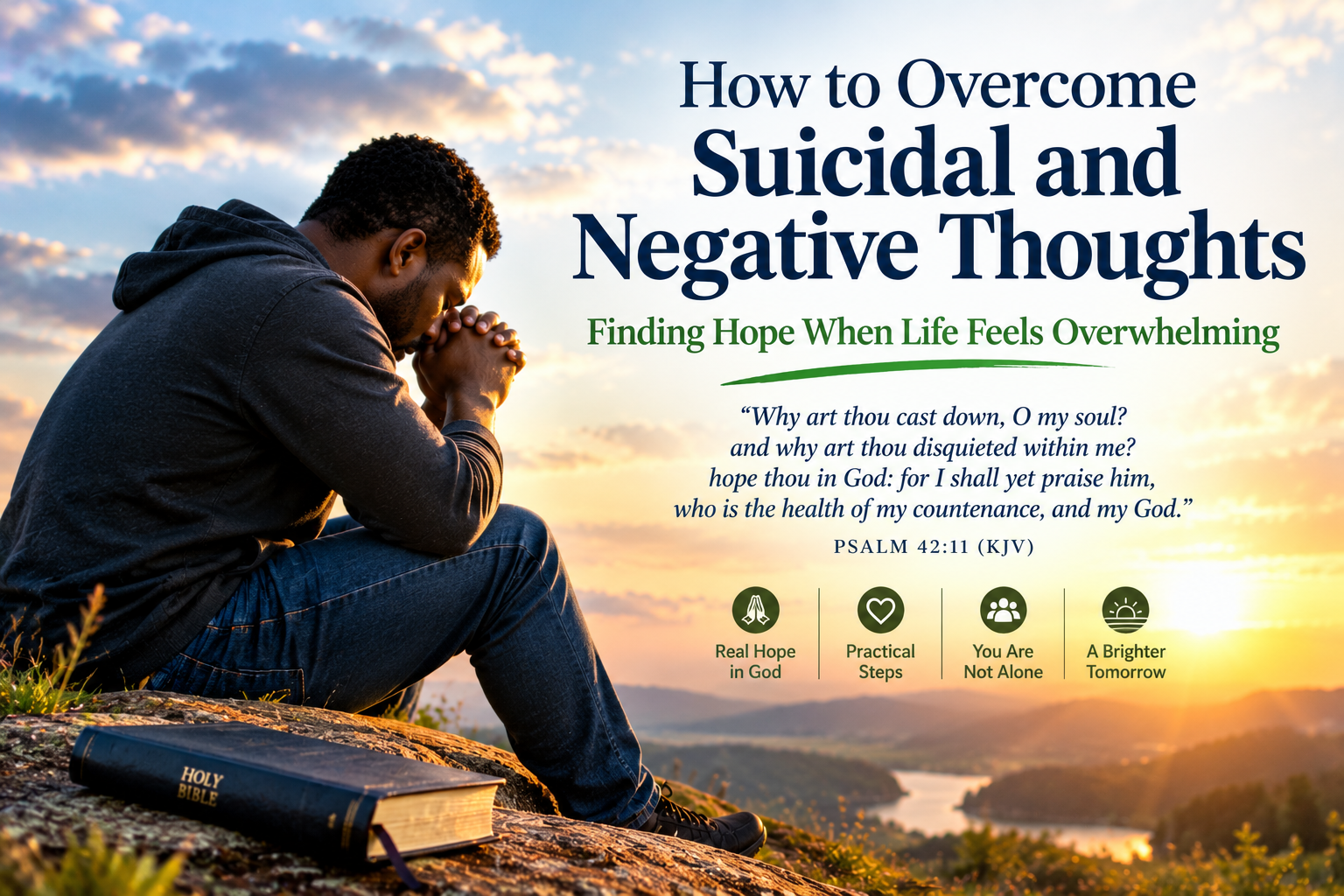
Key Scripture: “Why art thou cast down, O my soul? and why art thou disquieted within me? hope thou in God: for I shall yet praise him, who is the health of my countenance, and my God.” — Psalm 42:11 (KJV)
Introduction: Your Pain Is Real, but Your Story Is Not Over
Have you ever smiled in front of people while silently fighting a battle within? Have you ever felt so overwhelmed by life’s problems that you wondered whether things would ever get better?
Perhaps you are dealing with disappointment, loneliness, financial pressure, relationship problems, grief, failure, or a feeling that nobody truly understands you. Sometimes, negative thoughts become so persistent that you begin to question your worth or even wonder whether life is worth living.
If this describes you, please hear this: You matter, your pain deserves attention, and you do not have to face this battle alone.
Even faithful people in the Bible experienced deep emotional distress. Elijah became so overwhelmed that he asked God to take his life (1 Kings 19:4). Yet God did not condemn him. God provided rest, food, care, and guidance.
This reminds us that emotional struggles are not a reason to feel ashamed. Faith and seeking help can go hand in hand.
Here are seven practical steps to help you face negative thoughts and find hope again.
1. Recognise Your Thoughts Without Believing Everything They Say
When you are overwhelmed, your mind may tell you things such as:
* “I am a failure.” * “Nothing will ever change.” * “Nobody cares about me.” * “Everyone would be better off without me.”
These thoughts can feel convincing, especially when you are hurting. But a thought is not automatically a fact, and a painful moment does not define your entire life.
Practical step: When a negative thought appears, pause and ask yourself: “What has happened to make me feel this way? Is this thought telling me the whole truth, or am I seeing everything through my pain?”
You do not need to solve your whole life today. Begin by recognising the thought, taking a slow breath, and focusing on the next safe step.
Philippians 4:8 encourages believers to direct their minds towards things that are true, honest, just, pure, and worthy of praise. This does not mean pretending problems do not exist; it means not allowing painful thoughts to tell the whole story.
2. Talk to Someone Instead of Suffering in Silence
Pain often grows heavier when we hide it. You may worry that people will judge you, misunderstand you, or tell you simply to pray more. But you deserve to be heard with compassion.
God often provides support through other people: trusted friends, family members, pastors, counsellors, and healthcare professionals.
Practical step: Contact one person you trust today. You could say:
“I have been struggling emotionally, and my thoughts have become difficult to manage. I don’t need you to solve everything, but I need someone to listen and help me get through this.”
If you are thinking about suicide, tell someone directly. You do not have to minimise what you are experiencing to protect other people’s feelings.
As Galatians 6:2 teaches, “Bear ye one another’s burdens” (KJV).
3. Take One Small Step at a Time
When life feels unbearable, thinking about every problem at once can make you feel even more helpless.
Instead of asking, “How will I fix everything?” ask, “What is one thing I can do in the next ten minutes?”
That one thing might be drinking water, eating something, taking a shower, stepping outside for fresh air, or calling someone who can sit with you.
Practical step: Create a simple daily plan with three achievable actions:
1. One thing to care for your body. 2. One thing to connect with another person. 3. One thing that gives you comfort, peace, or purpose.
Small steps may seem insignificant, but they can help you get through difficult moments without demanding that you feel better immediately.
Remember: you do not have to feel strong to take one small step.
4. Bring Your Pain Honestly Before God
Prayer is not about pretending to be happy when your heart is broken. You can tell God exactly how you feel.
The Psalms contain honest expressions of sorrow, fear, confusion, and distress. God invites us to come to Him in our weakness.
Psalm 34:18 says, “The LORD is nigh unto them that are of a broken heart; and saveth such as be of a contrite spirit” (KJV).
Practical step: Set aside a few quiet minutes and pray honestly. If you cannot find the words, try this:
“Father, I am hurting, and I do not know what to do. My thoughts feel heavy, and I need Your help. Please give me strength for this moment, guide me towards the right support, and help me believe that my life still matters. Surround me with people who can help me. In Jesus’ name, Amen.”
You can also read a short passage, such as Psalm 23 or Psalm 42. If prayer feels difficult, you can simply sit quietly or ask someone to pray with you.
Remember: seeking counselling or medical care is not a lack of faith. Professional help can be one of the ways you receive the care you need.
5. Reduce the Things That Make Your Thoughts Worse
Certain situations can intensify negative thinking. These might include constant comparison on social media, isolation, lack of sleep, alcohol or drug use, or repeatedly revisiting painful conversations.
You may not be able to remove every source of stress, but you can make small changes to protect your wellbeing.
Practical step: Identify one thing that tends to make your thoughts darker and take a reasonable step to reduce its influence. You might limit social media, establish a regular sleep routine, take a break from distressing content, or spend time with someone who makes you feel safe.
If suicidal thoughts are present, do not stay alone with them. Reach out to a trusted person, move to a safer place, and ask someone to help you access urgent support. If you may act on these thoughts, seek emergency help immediately.
6. Remember That Your Worth Is Not Measured by Your Circumstances
Losing a job does not make you worthless. Experiencing rejection does not mean you are unlovable. Making mistakes does not mean your future is over.
Your present circumstances are part of your story, not the complete definition of who you are.
Psalm 139:14 says, “I will praise thee; for I am fearfully and wonderfully made” (KJV).
When negative thoughts tell you that you have no value, remind yourself that your worth is not determined by your income, relationship status, achievements, or other people’s opinions.
Practical step: Write down three things you want to remember about yourself, even if they feel difficult to believe today. These might include your kindness, your willingness to keep trying, a person who cares about you, or a responsibility you have handled well.
You do not have to solve every problem to deserve care, dignity, and support.
7. Hold On to Hope and Accept Help
Hope does not mean believing that every problem will disappear tomorrow. Sometimes hope means believing that help is possible, that feelings can change, and that you do not have to make permanent decisions during a moment of intense pain.
Lamentations 3:22–23 reminds us that God’s mercies “are new every morning” (KJV).
If negative thoughts persist, interfere with daily life, or include thoughts of suicide, please speak with a GP or mental health professional. If you are in immediate danger, call emergency services or go to A&E.
If you are in the UK, you can call Samaritans on 116 123, free, day or night, to talk to someone. If you think you may act on suicidal thoughts now, call 999 or go to your nearest A&E. You do not need to wait until things become worse before asking for help.
You deserve support today, not only after you have reached breaking point.
Conclusion: Please Do Not Give Up on Yourself
If you are struggling with negative or suicidal thoughts, please do not measure your future by how you feel in your darkest moment.
You may not have all the answers today. You may still have difficult decisions to make and problems to overcome. But you do not have to face everything at once, and you do not have to face it alone.
Take one step. Tell someone. Seek the support you need. Allow God and other people to walk with you through this season.
Your pain matters. Your life matters. There is no shame in asking for help, and you do not have to fight this battle alone.
A Prayer for Someone Struggling With Negative Thoughts
Heavenly Father, I come before You with a heart that needs Your peace and comfort. You know the thoughts I struggle to express and the pain I sometimes hide from others. Please help me through this difficult season. Give me strength to face today, courage to reach out for help, and wisdom to take the next safe step. Lead me to people who will listen and support me. When my thoughts become overwhelming, remind me that I am not alone and that my life has value. In Jesus’ name, Amen.
Reflection question: What is one safe and positive step you can take today, and who is one person you can reach out to for support?
If this article may help someone who is struggling, share it with compassion. A caring conversation and timely support can make a difference.